
This transcript has been edited for space and clarity.
Drew Glover
…Not only do we focus on deploying marketing dollars in a capital-efficient way, we also want a lot of founders and executive teams to build their teams in capital-efficient ways. And so by bringing us in, it's a group of different experts of different people that we wish we could have hired when we worked in-house once upon a time, it gives them the flexibility to scale and grow and prove out their models, specifically hit product-market fit in the most efficient way
Walter Thompson
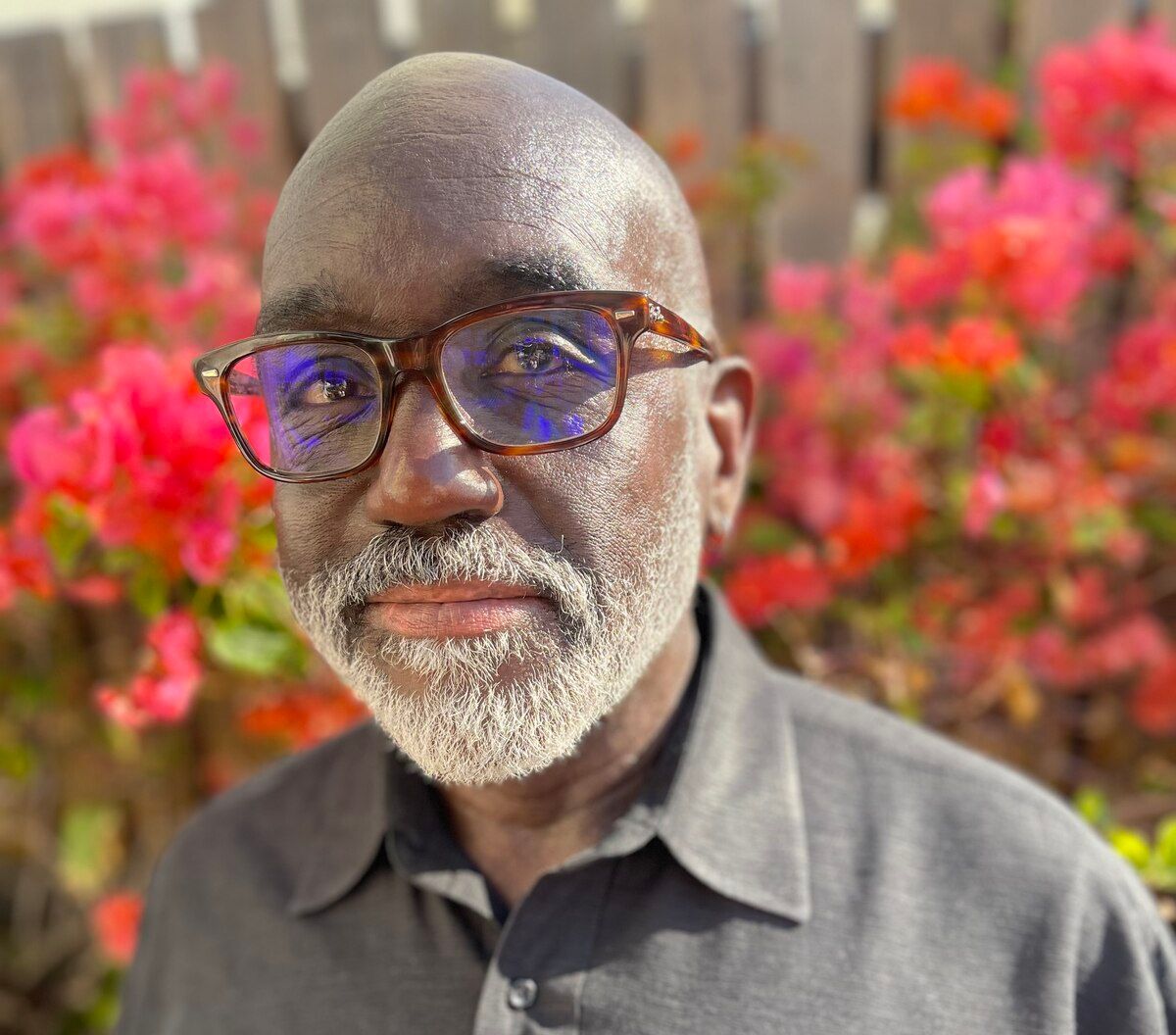
That’s Drew Glover, general partner of Fiat Ventures, an early stage venture firm.
He’s also a co-founder at Fiat Growth, a full-stack growth marketing consultancy, and also at Fiat Advisory, a private network that connects entrepreneurs with experienced operators.
I visited his office in May 2024 to learn more about how the three firms work in parallel to identify, support and invest in founders.
Drew Glover
We've always been big believers that a marketing team doesn't necessarily need to be this full time in-house team. What it really needs to be is a consortium of different experts dependent on the type of growth channels you're scaling up during different moments of your growth journey.
Walter Thompson
I’m Walter Thompson. This is Fund/Build/Scale.
Fund/Build/Scale is for anyone who’s interested in learning the basic skills required to launch a startup, secure initial funding and transform an idea into a sustainable business.
Interested? Subscribe to Fund/Build/Scale on all major platforms and follow the podcast on LinkedIn or Substack to get articles, excerpts, transcripts and more.
I'm talking today with Drew Glover, who is GP and co-founder of Fiat Growth, and also the co-founder of Fiat Ventures. Drew, thanks very much for having me in your office today. Appreciate it.
Drew Glover
Thanks for having me.
Walter Thompson
You started out with Fiat Growth in 2018. Tell me how that led to Fiat Ventures two years later.
Drew Glover
So, Fiat Growth started around five and a half years ago. And it was really myself and my co-founder, Alex Harris, who got it off the ground. I've known Alex for 20 years, we went to UC Berkeley together. Funny side story: I played football at UC Berkeley, and Alex was actually an equipment manager there during those times. So we got to spend a lot of time together both on and off the field. And as we went on our professional journeys, we reconnected as he was working at Chime as the head of marketing and growth, from Series A to series D, Chime’s a very large neobank. And I was doing a similar role at a company called Steady, a Series C company that helps folks in a 1099 world improve their financial health. Alex and myself had very unique vantage points while he was at Chime and I was at Steady where we were overseeing the creation of the user marketplaces there. So both Steady and Chime and millions of users and they had a marketplace where we would recommend additional financial tools that would improve their financial health. What naturally crept up there, as Alex and I were both gatekeepers of this marketplace, we basically were curating what went in that marketplace and what didn't get in that marketplace. And it gave us this unique vantage point from when we were talking to 20-30 companies a week, and some companies got into marketplaces, other companies were too small, others got turned down for a multitude of reasons. But whenever Alex and myself would run into a company that we thought was really interesting, we would basically say, “hey, we can actually help you scale up your business as advisors, would you be open to that?” And what that organically turned into is Alex and myself co-advising a number of businesses together. This was during the Golden Age of Fintech, it was 2018, 2019, 2020 the market was booming, a lot of businesses were popping up and a lot of venture dollars were floating around the market. And so Alex and myself, you know, to advisors, chips turned into three, three turns into five grew to 10, 15, we ultimately looked at each other and said, “hey, like we got to either make a decision of throttling this altogether, or deciding where we want to spend our time,” we made the obvious decision in the moment. And still today, it's an obvious decision, we decided to quit our day jobs and actually found Fiat Growth. And what we'd seen in the market was a huge gap, in that there were all these different agencies and growth consultancies living around but they were all generalists, really working with every different type of industry, every type of brand. We believe that a consultancy, specifically around growth and building cost-efficient scale needed to be born specifically in the fintech space. Massive rounds were being raised, growth by any means necessary was top of everyone's mind, and we believed that we had a strategy around cost-efficient growth, where you can take venture dollars or revenue and reinvest that back into the business in really thoughtful ways that made it so you just weren't throwing money into the marketing mix. So what started out with just the two of us over the span of five years has now turned into a 30-plus person, full-time agency that is very much full stack. But I will say just diving into ventures in 2021, we decided to actually start our venture fund. And that was only possible because when we started Fiat Growth, we had a very unique strategy outside of just getting paid on a retainer basis, we would ask for the contractual right to invest in every single business we worked with, meaning, if we worked the company, in the contract we signed, it stated that they needed to give us the opportunity to invest in their next round of funding. And at the time, we thought it was something interesting, we knew we wanted to get into venture, but didn't have the money to get into venture. However, over time, some really incredible companies that we were doing business with, and rights to invest started to compound. And so in 2021, we brought on Marcos Fernandez, who is the managing partner of Fiat Ventures, we had around 35 - 40 rights to invest to invest in some of fintech’s sexiest companies. And that's actually the deck we built to go raise our fund, we built a deck that listed out all the companies we have the right to invest in. And if we had invested from the very first day they gave us the right to invest, this is what our portfolio would look like today. And it was a very compelling story. It was, you know, 10, 20, 30x already, and it had been just a couple years since we started. So we raised our first fund, started in 2021, closed in 2022 at $25 million fund one. And we were really off to the races after that.
Walter Thompson
That's funny because I mean, in all the conversations I’ve talked with investors, they always start with like, “how do you get the risk out of the whole thing?” And it seems like that's very much where you started. By working with them, you know, handholding them from day one, you're de-risking them for an investor, but it turned out you were the one you were waiting for.
Drew Glover
Yeah, totally. That's right. And it's around de-risking at the earliest stage. And we call it “reverse engineering venture,” where we get to work with companies prior to investment.
Walter Thompson
You call yourselves “the in-house marketing team that you wish you'd hired.” So what does that mean exactly? What does that relationship actually look like day to day?
Drew Glover
When large rounds of funding come, the first instinct for a founder or an executive team is, “hey, let's build a team around marketing, let's build a team around sales.” We've always been big believers that a marketing team doesn't necessarily need to be this full time in-house team. What it really needs to be is a consortium of different experts dependent on the type of growth channels you're scaling up during different moments of your growth journey. And so when we say this in-house team, when we talk to a lot of our founders, especially the early stage ones, we're saying, “do not hire a growth team. Bring a team like us in who can build your entire growth foundation, maybe the first first couple channels you're scaling up your business in is Facebook and TikTok.” It’s very hard to find a marketing leader that is an expert in both of those, it's typically when you hire a marketing leader, you're finding someone that has a superpower in one thing, and then they're basically hiring a team around them to do everything else. So for us, not only do we focus on deploying marketing dollars in a capital-efficient way, we also want a lot of founders and executive teams to build their teams in capital-efficient ways. And so by bringing us in, it's a group of different experts of different people that we wish we could have hired when we worked in-house once upon a time, it gives them the flexibility to scale and grow and prove out their models, specifically hit product-market fit in the most efficient way. I will say, over the last couple of years, you know, we've really moved up market. So working with companies as low as pre-seed and seed all the way to public. And so when we're working with some of these much larger entities, of course, we're not saying, “don't hire a growth team.” They already have a massive growth team, they have departments. But when they do say, “hey, we haven't stood up a channel on Instagram yet,” we say, “don't go hire a team of Instagram experts, let us stand up that specific growth channel.” And then once we stand it up, will actually tell you the type of person you need to hire to replace us
Walter Thompson
Which actually leads me to my next question, how many companies are just hiring for growth too early, in your estimation?
Drew Glover
Too many? It happens all the time.
Walter Thompson
So when you do that, what are the bad things that ensue after that?
Drew Glover
Well, the hard part is, a lot of people, especially in the early days, like let's call it the pre-IPO stages, a lot of times the people hiring the growth team, they aren’t actually growth leaders. So when they're interviewing when they're trying to assess the type of growth they need, what their hire is, I always call it like they're hiring LinkedIn profiles, they're not actually hiring people that they specifically need for the type of strategies they are looking to implement. And frankly, they don't even know the strategies yet. So a lot of times, again, you're bringing someone on that great, they used to work at Robinhood. And when you tell your VC they used to work at Robinhood, the VC says, “great sounds like they have the best experience ever.” However, that doesn't mean that they are great startup people. It doesn't mean they're great for a Series B Company or Series D company, maybe that person was hired after Robinhood went public, and they're just a public company person. And their success is driven around bringing other agencies and full-time hires around them to make them successful. Again, this capital-efficient way of growth is, don't hire a full-time individual that you're going to pay $300,000 to to then go hire more people. Let's understand what the strategy is. Let's understand what your next goal is. Maybe that's fundraising. Maybe that's hitting $3 million in ARR, or $50 million in ARR. But let us figure that out together so we can figure out the type of teams we need to bring internally to scale up the right way.
Walter Thompson
Got it. How does Fiat Growth get paid?
Drew Glover
The model is pretty straightforward: we get a flat retainer for our services. Historically, most agencies do this — a lot of them are asking for a percentage of your spend. So if you spend $100,000 a month, they'll ask for 9% of spend, and so they're getting paid $9,000 a month. However, if it scales up to a million dollars, 9% percent of a million dollars becomes wildly uneconomical. What we want to do is, we very much want to treat our team as if we are an extension of their team and a full, basically a growth team out of the box. So it's basically a retainer. And that retainer typically reflects what I’d call a mid-level full-time hire would look like, depending on how many people from our team they need. Sometimes it's one person, sometimes it's three people, but we typically reflect it in the specific need and scope that they have. So it's a mix of retainer, a monthly retainer, and along with that, the right to invest. And sometimes if you know, we are really excited about the business, we will sometimes take equity as a form of payment as well to kind of offset different different price numbers.
Walter Thompson
So your services include, like go to market advisory and paid media influencers, affiliates, you have relationships with a lot of enterprise customers, I imagine as well. So that's great for your clients. But I'm also wondering, as far as storytelling, how much do they need to have that locked down before they come to you? Or is that something you're actually going to help somebody with as far as helping them articulate their value proposition?
Drew Glover
Yeah, well, I'll tell you, we got off the ground, we were founded on the idea that the people we're working with had zero clue what they were doing. And we were walking in with a blank whiteboard, and we were figuring it all out together. So even today, we very much thrive in this environment of, “we know we need to grow, but we don't know how we need to grow.” And then we actually come in and build out that entire go-to-market strategy. What we built over time, we've kind of built our consultancy specifically based on what our clients are telling us they need. And so what is turned into is very much a full-stack suite of services. That is, affiliate partnerships, strategic partnerships, performance marketing, that goes all the way through building out your martech stack to lifecycle marketing, it is creative services. So actually doing all the different creative that goes along with all of our different types of marketing, and then lifecycle marketing, and then sales operations as well. So we've seen a huge transition in the market from this direct-to-consumer obsession within the VC space to now this more B2B and B2B2C obsession. And so we do a lot of B2B and B2C work. So it's really, the market shifting and the waves of the market is very much built out a really wide breadth of services and offerings that we can deliver to any client of any size.
Walter Thompson
Cool. Let's shift into Fiat Advisory: you've got more than 120 advisors who work with your clients. How do you pair folks and what stage are the companies that they are actually pairing them with?
Drew Glover
Yeah, so I think it's important to just say, like, why Fiat Advisory exists at all, and a lot of it was because what we realize is, everyone wants to grow, everyone needs to grow. But not everyone has the money, the team, the ability to do that immediately when they want it. And so that turned into us, in some cases having to having to turn away business sometimes, because like, “you're just not quite ready. You know, this is our retainer, this is what it is.” And I personally, and same with my co-founder, we just really dislike having to turn away founders that had really incredible ideas and had really good businesses, but just really weren't quite there to turn on the growth spigot. And we realized how vast our community was, that we had built since the inception of Fiat Growth and even Fiat Ventures. And so in our minds, we said, “there's an opportunity to bring all these really great folks in our community together that are experts in fintech and growth, and really make it an organized community.” So what we have now is we have 120 advisors, all of them are underneath Fiat Advisors and they get matched up really to early-stage founders that aren't quite ready for Fiat Growth. And it's all very expert-driven, somebody might come to us and say, “hey, I'm getting a lending product off the ground, and I need to get a debt facility. How do I do that?” We say, “great, let us connect you to our debt facility expert who's an advisor of ours.” Sometimes that relationship is done in equity only. Sometimes it's done in a really small retainer, that could be a couple of hundred dollars to a couple of thousand dollars a month. But there's just so much flexibility in terms of how they can work with those individuals, it gives us as Fiat as a whole to make. So we're adding value to every single person that walks through our door. But we still get that right to invest in all the companies underneath Fiat Advisors, which gives us that excitement of continuing to add access to what we do at Fiat Ventures.
Walter Thompson
So is it fair to say that all the companies Fiat Ventures is investing in came through Fiat Growth or Fiat Advisors?
Drew Glover
Not quite, around 60% of those investments that we've made to date have come through Fiat as a whole Fiat Growth and Fiat Advisors, the other 40% of companies that we just see really doing really incredible things in the space, you know, outside of the hundreds upon hundreds of companies that we're talking with are Fiat Growth and Fiat Advisors. We're talking easily through another 1500 a year through Fiat Ventures. You know, the goal of everything we're doing within Ventures is you need exposure to the market and you need to have access to the market. And so we have many goals in our business, but specifically for the venture fund, we want to make it so we're optimizing for as many meanings for conversations as possible, and as many engagements through actual work as possible on a year-over-year basis so we're not missing any exciting deal that might be in the space that we want to invest in.
Walter Thompson
So starting out with 25 million, you closed that in 2022. How much AUM today in 2024?
Drew Glover
Thirty-five [million] in 2024. However, we are trending towards our second fund here, which we're raising for. So hopefully by the end of the year, we'll have some more exciting news to share.
Walter Thompson
Very good. I will come back at you for that.
Drew Glover
Please.
Walter Thompson
And what's your deal flow look like right now, as far as approximately how many deals a year?
Drew Glover
Yeah. So typically, for us, so out of Fund One, we made the commitment of investing in 27 companies. We are in the 20s right now in terms of investments. So we're coming up towards the end of Fund One. But for us, you know, we are doing anywhere between five and eight investments a year, give or take. Luckily for us, and I think the market shift that's happened is you know, what used to be this founders’ market is now a VC’s market, just because it's a big shift. Money's not as readily available, we have the ability as investors to be more patient with our money, which is really what our model is. For Fiat Growth and Fiat Ventures, we want to be able to work with a company before we invest, we want to be able to have that second, third, fourth, fifth, sixth conversation before we decide to invest, as we talked about earlier, de-risking investments is the hardest to do at the earliest stages of venture, we're investing in pre-seed and seed companies. So yeah, in short, investing in, you know, somewhere between say, seven and ten companies a year. But for Fund Two, that will probably get a little bit smaller as we'll probably invest in around seven a year.
Walter Thompson
If you're investing pre-seed, that means you're investing usually pre-product, pre-revenue, pre-revenue, pre-customer?
Drew Glover
So we invest in seed a lot more than pre-seed. And that is mainly because we definitely want to have a product and we want to have a product in-market already. There are some times where you'll run into a pre-seed company, where they won't have product in-market. However, for us, we're typically making those investments in founders that we've done work with previously. And then seed is really the space that's optimized to our process, which is work with them prior to investment,
Walter Thompson
Because that I was gonna ask you, how do you de-risk pre-seed investments, but if they're known quantity, that seems like that's the —
Drew Glover
That's right. That's right.
Walter Thompson 17:35
Got it. Is your focus still largely on fintech, or have you broadened that?
Drew Glover
It is very much on fintech. But I will say fintech has broadened. Therefore we have what we call, not jokingly, but we call it internally, we call it fintech plus, where now we've seen especially with this, like B2B element, we see it a lot with these unified API's. We see fintech being embedded into all these adjacent industries, proptech, insuretech, healthtech, climatetech, agetech, I could go down the list here. And so even as we've organically continued to see different deals come to our front door. And even as we seek out new deals, we're seeing it into a number of different industries that we've always been very interested in. But just haven't had the ability to collaborate with fintech in the way it has. So we're really excited, like so much. So we're, I constantly say, over time, the best generalist investor will be rooted in the best fintech investor.
Walter Thompson
What are you looking for at the moment? And how do you like to be approached: a cold email ,a warm intro? Everyone says “warm intro,” I shouldn't even ask the question anymore. But how do people usually connect with you?
Drew Glover
I'm very active on LinkedIn, actually. As a marketer, I believe LinkedIn is like the future of a lot of really, really effective and strategic marketing opportunities. But, you know, I'm constantly on LinkedIn, I feel like it's a really great way to have a very, like, really good conversation. And we can also collide around different content that's out there. And that's a really good place to network. Outside of that, It's our job as VCs, to really be out and about constantly at conferences for fintech. That could be Fintech Meetup, it could be Money 2020, it could be a number of different conferences. Outside of that, it typically is warm. It really is an industry of “networks breeds networks.” However, I try to I typically try to be a little bit more approachable. I feel like, as a Black VC that had to find a backdoor into the VC space, I understand how few folks that look like myself are out there both as a fund manager, as a venture capitalist, as well as a founder of color: I'm typically looking for ways to make myself as available as possible.
Walter Thompson
Is there an email address where people can reach you?
Drew Glover
Yeah. Drew at fiatgrowth.com.
Walter Thompson
Awesome. Thanks for sharing.
Drew Glover
Of course.
Walter Thompson
What are some of the top questions first-time founders should be asking you?
Drew Glover
A lot of founders, really all markets, they assume that all money is good money. And I'm not saying that there's a ton of VCs out there that are bad people. I just think that all VCs have a very clear motive of what they want their money to do for them. I don't feel like a lot of investors ask that of the VC. They're just hoping that that VC gives them money. There are some VCs that invest in the power law, I'm very much a power-law investor, every company that I invest in, I expect it to be a generational business that becomes a multi-billion dollar outcome. And there are some founders that come in rooms, and they're actually, they don't have multi-billion dollar ideas. And so me turning them down, I'm typically very transparent around that specific piece. A lot of founders, they don't have billion-dollar ideas, but they want to run the venture process. And some of the harder conversations I have is asking them, “listen, this is a great $20 million business. And that's actually a really great business. It's a great lifestyle, it might not get you the cover of Forbes. But that's a very exciting business. I would only invest in this, if you had like two more stops on the train. You told me a $20 million idea. How much bigger does the idea need to be for it to get to 500 million? How big does it need to be into a billion?” You know, when the founders of Airbnb walked into their first investment meeting, I assure you, they didn't say, “hey, we want to take these three neighborhoods in California and turn it into a short-term rental community.” They said, no, “we want to make it so every house in the world across the globe turns into a short-term rental.” That's a multi-billion dollar idea, that community one, I’m indifferent. So I feel like I'm constantly either pushing founders to think bigger, or getting them to really take a look in the mirror and understand the type of business they want.
Walter Thompson
Investors always have a better understanding of total addressable market than entrepreneurs ever do. I suspect no one actually says yes in the room when we're being pitched. But when did you know the last time you're looking at a deal? What made you say yes to the last thing you were looking at?
Drew Glover
The path to saying yes, quicker, to me saying yes quicker, is a mix of a couple of things. It's the mix of having an idea that is big enough and novel enough and unique enough to really get excited about, it's confidence that that team can execute in a really meaningful way. Like, let's not underestimate the power of a really incredible operator. A lot of people can tell really great stories, but not a lot of people can make stories real. And the other one is really just having this doggedness in a founder and a founder or co-founders of just knowing that regardless of what the market throws at them, they have the ability to tactfully pivot and build by any means necessary. I know because of the early stage that we're investing in, there are going to be really tough times where you have to move a company in a different direction. And I've seen so many times that take the life and energy out of a founder. And I see these other founders where it actually gives them energy. And as much as Fiat does a great job at underwriting and running diligence by doing the work with these founders prior to investment, at the end of the day, founder dynamics are the most important and just like the general attitude of that founder. It can never go overlooked. And I don't care how many pivot tables someone could put in front of me about a business, I always got to sit down with that founder, look them directly in the eye, and ask them some really hard questions about who they are as an individual to get a really good understanding about their character and their ability to push through any challenge.
Walter Thompson
Are you only willing to invest in teams? Or do you also work with solo founders?
Drew Glover
We'll work with solo founders. We definitely will. I will say typically, it happens if we've seen them do it before. And sometimes that means we've worked with them before for Fiat Growth, but then invest in their previous company but had a front-row seat to what they were able to build. I'd say if we're looking at statistics from our portfolio, like definitely looking for more co-founder type of relationships, we do find there to be a great power in having someone that fills the gap of another founder, but at the same time can act as a as a sounding board and, and a wise mind in different moments, it adds a ton of value.
Walter Thompson
When is it too early to fundraise?
Drew Glover
It's a good question.
Walter Thompson
The reason I asked — I want you to think about it. But the reason I asked is because I feel as though it's shifted a lot in the last couple years, maybe since the pandemic, maybe since growth at all costs isn't really the goal anymore. Now, it's just kind of like, well, “I want to see some actual proof of concept. Here's an actual growth and so you need money for that, and I think people are raising money faster, and spending it faster to show that proof faster.
Drew Glover
Yeah.
Walter Thompson
But maybe I'm wrong about this.
Drew Glover
The only reason I have a little bit of silence before I answer is because my immediate answer is: always be fundraising. However, I think that there are different ways to fundraise, for example. I have founders that have raised some of the largest rounds that you've ever seen. But they were never really fundraising. What they were doing is, they were just having really good conversations with VCs. Don't get me wrong, when it was time to ask the question, they asked the question, but they were building relationships with VCs. And as I always say, your say-to-do ratio needs to be 100%. And if you come to me a year before you fundraise, and every time I talk to you, I say, “what are the top things that are keeping you up at night? Like, what's your next goal?” And you're constantly saying, “well, I have these three deals that I want to close, I think these two deals are gonna close, I don't think this one's going to close.” And I see you a month later and you're like, “yep, those two closed, that one didn't close.” But you know, you start building that track record of, you're able to follow through on everything you say? When the ask comes of fundraising, it doesn't feel like fundraising, you've done all that upfront. And I feel like that's an art that is leaving the space a bit. I feel like a lot of folks believe they just need a deck to go fundraise. And then they start asking questions, and then trying to put arbitrary dates on when the round is going to close. And, you know, “there's only $300,000 left in this round!” There is a relationship foundation in the VC space that I think needs to be honored still. And I actually think it makes founders' jobs a lot easier if they're willing to make that upfront investment.
Walter Thompson
I think first-time founders often want to go out and start making those relationships, when they're fundraising, making it totally transactional, you're gonna be more successful if they're just like relationships before you start asking strangers for money.
Drew Glover
That's right, all the time. And again, the best, the best fundraising founders that I've been around are the ones that say, right after they just close a round, they just keep going. They're like, “great. Yeah, sure. It's a little bit less pressure sensitive, the fundraising I'm doing, but I'm taking calls every time and I'm reaching out to people, when I'm going to conferences, I'm setting up 20 conversations. This is what I'm working on. I know you only invest in Series B companies, and I'm a seed company, but I want to get your eyes on this now and just get your feedback about the market.”
Walter Thompson
I go to these events and you can hear — you can feel the thirst in the room.
Drew Glover
Yeah.
Walter Thompson
Should people shift their energy a little bit and make it a little less, “I need to walk out of here with a term sheet” and [more], “I need to walk out of here with a relationship and a friendship?”
Drew Glover
In a perfect world? The answer is yes. I will also say in the world we're living in right now in the market we're living in, there's a lot of thirst because there's a lot of businesses that are struggling right now. I'm not sitting here saying to anyone that's listening, that if your business has six months of runway, go build relationships, I'm just saying, you know, when you have 24 months of runway, be building relationships. So, that advice is very much dependent on the stage of your company and where it's at. But the second you fundraise is the second you start building the relationship for the next two rounds of your company. And that should always be a core priority of your function as a leader.
Walter Thompson
How's your reach in areas outside of tech hubs like Silicon Valley, how do you actually connect with talent that's not in this bubble?
Drew Glover
There's a lot of things we can say we hated about the pandemic. But one thing that I did really love about it is it is it. It built a forcing function into scaling my community far outside of Silicon Valley. Fiat Growth, the majority of our team is across the entire country. Everything from Portland and Chicago and New York to New Jersey, you know, all the way over to, we have a couple folks in the South as well. But the same thing happened with [Fiat] Ventures, when we started raising our fund, it was in 2021. And we weren't quite out of the weeds of the pandemic. So a majority of the founders and businesses that we were working with for Fiat Growth in having conversations with for Fiat Ventures, we were doing it over Zoom. And you know, if something was really exciting, we’d find a way to meet up in person. I think that built a really great ability for us to always be looking outside of Silicon Valley. And it gave us the ability to build a huge network outside of Silicon Valley, then the VC space. If all else fails with what we have at Fiat Growth and our infrastructure there, we have this thing, I mean, the VC community and how we collaborate, it's a very rich relationship that we all have with each other. So if you know 10 VCs in Tulsa or if you know 10 VCs in Alabama, they're always going to be sending really incredible deal flow your way. And so we're always constantly looking outside of that, we're also constantly looking to make sure we're investing in diverse founders and managers of businesses. And that doesn't always, it's not always the easiest thing by just looking in Silicon Valley. So we're constantly taking advantage of that, you know, if we're talking outside of the US and kind of more of a global stage, we very much tiptoe into that. Because when you're really expanding outside of the US, and you grew up in the US, and you don’t really have anyone on your team that specializes in anything else, outside of it, you really need to have a physical presence there to fully understand the location and the opportunities that are there. That is not, especially in the early stages, it's not a digital assessment, or digital due diligence that you can do by getting access to the right websites, you really need to understand the thesis that you have, why you want to invest in that space, and why those specific communities and populations need a service like you're interested in learning more about.
Walter Thompson
I feel like founders in the Bay Area, they have — you could have had a professor who's an angel investor. So a lot of these things are second nature for people who are here. In your experience, founders working in your two examples, Tulsa or Tuscaloosa? Did they have the same questions and blank spots? Are they just as prepared to startup as anyone else is? What don't they know, I guess, or are they all on the same level?
Drew Glover
I think it's more of just a lingo thing, I think out here in Silicon Valley we put a lot into signaling of a company. Everyone kind of made up “Series A, Series B, Series C,” you know, “bridge round, extension round,” these are all signaling and storytelling strategies to get people wrapped around your progress and company. That's just like a rudimentary example of a lingo type of thing. A lot of times when we're talking to companies outside of Silicon Valley, we're just hearing them really just talking about the update to their business, like a very pure way. We're also hearing — I mean, this is a lot of times where I'm talking to the companies that don't have billion-dollar ideas. They have great ideas and great businesses. But here's the ones where I'm like, “yo, are you sure you want this to be a venture-backed company? If you want it to be a venture-backed company, come back to me with a thought-out plan of the type of business it's going to look like when you guys are hundreds, if not thousands of employees getting ready to go IPO in the next 15 years.” But really interesting businesses and ideas pop out of those spaces, because they're just dealing with location and population challenges that we just don't see here. And so you see a lot of diversity in thought and business structure based on challenges that we just don't get to see physically by walking down the street in San Francisco.
Walter Thompson
When, if ever, do you recommend founders drop everything and move here to the Bay Area?
Drew Glover
I wouldn't tell anyone that they need to fully move to the Bay Area. And I would actually argue that like the Bay Area, or New York, or you know, depending on where you live in the US are interchangeable at this point, specifically in fintech. But I would typically say do it when you're really getting ready to lean into fundraising. There is so much value and I'll tell you building these relationships, really tough to build relationships over Zoom. When you talk about someone investing in your company, you need to have the ability to say hey, I'm in your neighborhood, let's grab a coffee. That goes a lot further than you know trying to get back on their calendar. And if a VC that you in your heart of heart, or a group of VCs in your heart of hearts, you feel like should be taking a look at your company, but you just can't get their attention, you need to have the ability to go to these conferences to go to these places where you know they're gonna reside and find them. Sometimes you’ve got to turn nos into yeses. And you need to be in the same space as these individuals to be able to flip someone's mind into a different outlook on whatever you're building.
Walter Thompson
Since starting the podcast, I've talked to a number of investors who, like you, offer turnkey solutions, like DevOps or product management, or getting your sales motion up, helping teams get to market faster. And I guess my question for you is, is this the next evolution of VC? Is this how it's going to be now, getting down there and actually helping you raise things, grow things, test things, is this what VC is going to be in the future?
Drew Glover
I think it's a universal “yes.” However, I think it's going to happen in stages, literally based on the stages of investment, I don't see that changing very much for called Series B and above. A lot of times at that point, here's enough data to underwrite a business. And money plays because the rounds are large enough, where it's, you just typically don't have 18 different Series B offers, you have like maybe one or two, and you're just choosing the one that you want on your board the most, the VC you want on your board the most. I think in the earliest stages, though, [it’s] wildly important to have some type of additional offering and platform that is going to add strategic value to the growth and scale and success of a business. Term sheets are a commodity right now and over the last 10 years, a lot of early-stage funds have popped up. A lot of them are cash only: “just take our money.” And there's always a story of the added value they can deliver. But really outside of their network, nothing really exists. And we're even seeing it with a lot of VCs that historically had been just a check now trying to, you know, create accelerators, now trying to start actually building platform teams to really add expert value to their portfolio. But I do believe this is the future. And I do believe that the next wave of VCs that are raising fund three, four, or 5,6,7,8,9,10 are going to have adjacent platforms beyond just the check to ensure the success of every business that they lean into.
Walter Thompson
Talking about the innate discomfort of being an early-stage startup founder: it's risky, and it's a lot of work, and it's stressful. And it seems remarkably unrewarding until you have something that pays off. I'm not sure why anyone would want to do this honestly, it seems terrible. If you're working with someone trying to turn one of their weaknesses into strengths, what has that looked like for you give me an example of you coaching someone and helping them to see themselves differently.
Drew Glover
I've learned the hard way over the years: my goal is not to turn their negative into a positive, it's simply for them to recognize their negative is an actual negative, that the thing they're not good at is the thing they're not good at. Once we have agreed that that is an issue that is something that we need to solve for. Let's go make sure that we fill that with someone else on your team. Let's go make a hire for that. And when we make that hire, let's tell that hire “the thing I'm not good at is this. That's why I'm hiring you. You are here to fill that void.” And then once we figure that out, we go back and we tripled down on the superpowers. I think there's so much wasted energy by founders trying to be good at shit they're not good at. And the energy —
Walter Thompson
— I think that's grind culture. That's the problem.
Drew Glover
It is. it totally is. And what they need to be doing is moving that energy into their superpower, which is a couple of things they are really good at, like, the reason why they got that business off the ground is because there's a couple of superpowers that are absolutely undeniable. I’ll come back: ten years ago, 20 years ago, you just gotta have that grind culture, you gotta figure it out. In the world we live in today, with the amount of technology we have, they can optimize for the things that we're not good at, the amount of contract work of people — here, overseas, wherever — they can help you optimize for the things that you're not good at. There's just so much access. So I'm constantly saying, I talked about this some my VC friends over the next 20 years, we're gonna see billion-dollar businesses that literally have 60-person companies, because there's going to be so many ways to outsource and optimize for the things that back in the day, we needed to have people power to do. And so I'm constantly telling a lot of our founders that have their flaws or have their things they're just not good at, “either hire for it, or use technology to optimize for it. But you need to keep optimizing for your superpowers. That is what's going to make sure this company is successful. If you need help doing that, I can help you optimize in the most effective way.”
Walter Thompson
I've never actually asked a VC this question, when you're working one on one with entrepreneurs. Where and when do you get frustrated?
Drew Glover
The thing that I get most frustrated with with a lot of founders is delegation. A lot of early-stage founders, as we talked about earlier, have this grind culture mentality. And when they really start building their team, they are really excited that they have a team, but they don't know how to utilize their team and delegate to their team in the most effective way. I hear a lot of times, they’re working on far too many things based on where the company is at. And they're either not delegating, or they're actually hoarding money, and not building out their team in the right way. I think a lot of it's because of the market, sometimes a lot of it is because of fear of running out of money or having to raise again, but sometimes, and I say it all the time, “we're giving you this money, and literally this part of the money we're giving you, I want you to go run tests and be okay losing it, be okay setting it on fire. We need to figure out what doesn't work so we can figure out what does work.” And so a lot of founders just get scared. They want the money. But sometimes, when they get the money, they get scared to use it. And I'm constantly trying to push them in the direction of, “you need to get over this now for us to become a multi-billion dollar business. You need to be okay spending money. And you need to be able to do it in efficient ways for us to hit the outsize goals that we have, by us being an investor in you and us believing in you.”
Walter Thompson
You're a Black VC. And I'm a Black journalist who used to work in startups in Silicon Valley. We both have uniquely informed perspectives based on our own experience. And I was thinking, you know, there's not a lot of people like us who work in Silicon Valley. And knowing that, if you're a Black person working in a public tech company, you’ve got a pretty good job, you know, making six figures. It's stable, even though there's rounds of layoffs and stuff. Knowing that only, let's say what, less than what 2% of VC funding went to Black people a couple years ago, why would I want to make that leap? Why would I — that seems really counterintuitive, as far as I have a good job here with a public company and stock options, and a steady salary. And benefits. Why would I jump into something where I know I'm not wanted, so to speak, as far as the venture community — how do you square that circle?
Drew Glover
I don't know the answer to that. I wish I did know the answer to that. I can tell you why I did it.
Walter Thompson
Let’s talk about that: you must have known that this wouldn't be an easy path.
Drew Glover
Totally.
Walter Thompson
But you jumped in with both —
Drew Glover
— totally, yeah. You know, I grew up, I had a really, really interesting, really interesting path. Just by coming up in Oakland, my parents were very civic-oriented, dad ran a nonprofit that helped underserved communities find affordable housing in East Oakland. Mom was a principal at the Oakland Unified School District. Family in general was just nonprofit, through and through. I grew up in a family where I wanted to do good, but I also wanted to make my money. I grew up in an environment where it was middle- to lower-class socioeconomic status. I got everything that I needed, and sometimes I got what I wanted as well. It was a great childhood. I am so thankful for my childhood and I love my parents on such a deep level. But it drove me a little bit, because my parents didn't put me in public school, they demanded to put me in private school. And so I’d go home to my lifestyle but I’d go to school to a very affluent experience, majority white. I’m so thankful for that too, because it gave me the ability to be able to navigate many different types of worlds. When I got to college I played sports all throughout school. And when I got to college, I played football at UC Berkeley, I was in a locker room, and it was a melting pot of individuals, it was socioeconomic backgrounds, different locations, different races. Again, another opportunity to really give me the ability to navigate these different worlds, regardless of who they were, their background, the type of people they were. And by the time I got into the business world, I found myself continuing to navigate now comfortably, a lot of very different environments. And what at one point was very uncomfortable, it started to become comfortable. And I always push this to everyone, like, the only way to feel comfortable in very foreign environments, is to push yourself to always be uncomfortable, because over time, you'll just get accustomed to the space. I felt as if I had gone through such a journey to find myself comfortable, and really any environment I walk into, I just wouldn't find myself intimidated by anything. On top of that, I just had the entrepreneurial bug. And that is constantly living in a world of mirages, where you're like, “I can do that. Cool, I did it, I can do a little bit more, I can do a little bit more, one more mile, one more mile, one more rep, one more rep.” And between my background in between that entrepreneurial gene that I have, I feel like I've been able to come up in this world with blinders on. And I really want to prove people wrong as well. I know. And anybody that is not white in this world knows. I say to my wife — my wife is a white woman — I tell her, “I'm gonna go to this party, and I’m gonna remind you, I'm going to be the only Black person there, no one's going to think of it that way. But I'm going to be, I'm going to know it. And I just want you to recognize it. Because we have a daughter, that's going to feel the same way.” But I see that as an opportunity. When I walk in those rooms, I get very excited. I know that I can break down barriers, and I can break down stereotypes. I know I can represent my race and my culture in a really thoughtful, exciting way. And I know I'm leading the way for anybody that might be in my wake, and I'm just following everyone that's done it before. But it means a lot to be in the position that I'm in right now. And the thing is, once you find some success in it, just like most things, once you reach a peak, you look down, you're like. “there's no way I'm going back down, there's only one way up, there's only one way to go.” I'm just climbing right now, and it's really fun.
Walter Thompson
What's next for you and Fiat?
Drew Glover
Lots of things. Fiat Growth, we're gonna continue to scale. I believe that there's just not enough infrastructure out there for early-stage founders and companies to really ensure that they continue to find success in the most vulnerable stage of their journey. Over time, I'd love for Fiat to continue offering additional services that really every startup needs, I kind of always envisioned it as this ultimate startup ecosystem, where in the earliest stages, you kind of enter our world and you don't leave it until you hit that, that that stage where you have a VC saying or you know, an investor or board member saying, hey, now we gotta hire in house. But I want to make it so a lot of these companies — I talked about these companies that are multi-billion dollar companies that have 60 or 100 people? I want to be able to aid that next generation where we can utilize technology and service to make some of the next largest companies that we've ever seen. Fiat Ventures? We are in this for fund 2,3,4,5,6,7,8,9,10. I want to be doing this when my hairs are gray, I want people to say. “Drew, please retire, it's time for us to take over.” So we're in that we're in this the rest of our lives. And I'm really excited because it's such a fun vantage point to be able to talk to all these companies and always know where the smartest people's minds are going in terms of what's coming next. And there's gonna be a number of different service lines similar to Fiat Advisors that opens up within the Fiat ecosystem over time. Because, regardless of size, we want to be able to add value to the founders that need help the most.
Walter Thompson
Drew, thanks very much for a great conversation. I really appreciate it.
Drew Glover
Thank you, I really appreciate it. Thanks for having me.
Walter Thompson
Thanks again to Drew Glover of Fiat Ventures for appearing on the podcast. To contact him directly, email Drew at fiatgrowth.com or find him on LinkedIn.
The Fund/Build/Scale theme was written by Michael Tritter, who performed it with Carlos Chairez.
You can find Fund/Build/Scale on LinkedIn and Substack, for now.
If you’d like to send me an email, I’m at [email protected].


