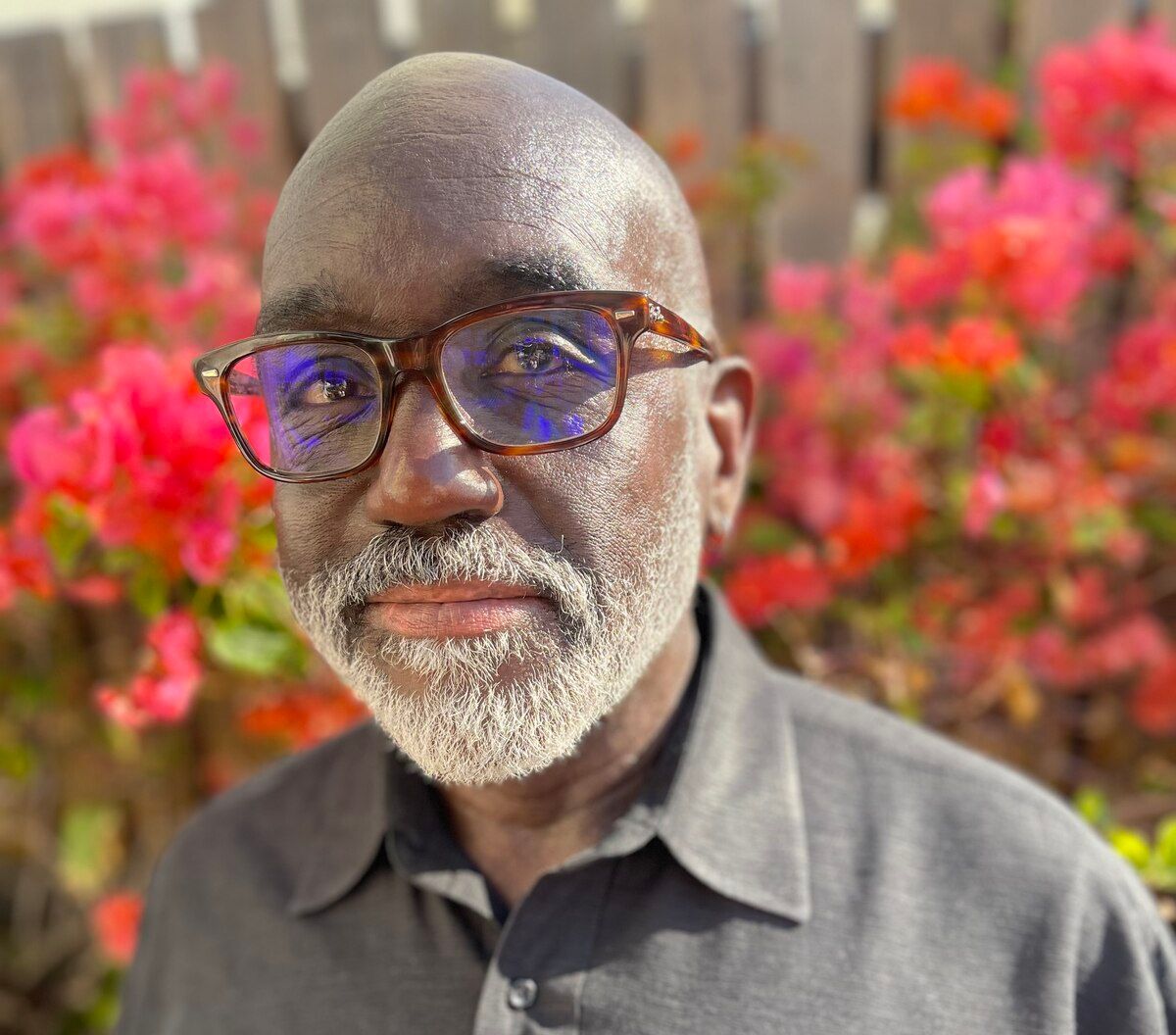

Armon Petrossian 00:01
There were some things we had to do to be scrappy in the early stages. You know, we, for example, one thing that doesn't get mentioned is we raised a pre-seed round after the inception of our company. And that was all money that came from people that we worked with. Friends that knew about us, that believed in us, that we're willing to bet on this idea, because at the time we had such little exposure to the VC industry, we didn't even know where to start.
Walter Thompson 00:30
That’s Coalesce CEO and co-founder Armon Petrossian. Launched in stealth, Coalesce started out with a $5.92 million seed round and 2020. In September 2022, the company came out of stealth with a $26 million Series A. I framed this interview to cover the time period from seed to Series A, and at my request, they gave me access to a slightly redacted Series A pitch deck, which was very helpful. Little did I know they were already preparing for their next round. A few weeks after we recorded this interview, Coalesce announced a $50 million Series B. I'm Walter Thompson. This is Fund/Build/Scale.
Armon Petrossian is CEO and co-founder of Coalesce. Thanks very much for joining me here today.
Armon Petrossian 01:14
Happy to be here. Thanks, Walter.
Walter Thompson 01:18
In September of 2022, you announced a $26 million Series A several months after you exited stealth and raised $5.92 million in seed funding. That was in January. So the first question I wanted to ask you is, why did you and your team decide to build in stealth? What advantages did it give you and the product development process?
Armon Petrossian 01:39
Yeah, so part of that story is partly inspired by the technology partner and platform we work with most closely, which is Snowflake. And Snowflake was unique in the sense that they went through an R&D phase for quite some time building out the platform and their product prior to emerging publicly out of stealth. And that was my first time actually being exposed to that concept, where you spend a significant period of time in R&D, building out a mature product that you then take to market and publicly at least, and there's so many benefits in doing that. And when we thought about starting Coalesce, we were fortunate because we had a ton of industry experience prior to starting the business. And we also had a lot of exposure to the types of customers that we were going to be selling to and working with. And we knew that there was a level of maturity, when it came to the product that they were going to expect when we came out and went to market. And so our thinking was, given we've got clarity on what we need to build. And given we've got a crystal clear vision on the types of customers we're going to be working with, let's take advantage of that, and build as mature of a product as we possibly can as mature of a minimum viable product as we possibly can, prior to taking it to market one for one reason, because it allowed us to have a stronger degree of focus and building the product without having to work with customers interactively at a larger scale. Secondly, from a competitive standpoint, it put us in a position to come to market much further along than any other player could have. If they were to immediately take in an idea to market. So that way, anybody else who were to try to replicate, what we were doing would be 2, 3, 4, or five steps behind even if they were to stop a pivot of a dime, and start moving in the same direction as we were whether that's from an architectural standpoint, feature standpoint. So we saw so many advantages, and being able to start in stealth, build up, build out a miniature MVP, and then take it to market both from a customer segment standpoint, as well as a competitive landscape standing.
Walter Thompson 03:56
That phrase, “building in public,” it's such a long-standing Silicon Valley tradition, or cliche, however you look at it, I suppose. How did the challenges of AI product development influence that decision to build in stealth or in public. I mean, R&D is a massive thing. You want to get first-mover advantage. But are there any kind of like in your mind, guiding principles for, “here are the founders who should be building quietly in stealth, and here the ones who are safe to be more transparent?”
Armon Petrossian 04:22
Yeah, that's a good question. So from my perspective, everything's based on context based on the situation that you're in as a founder and the type of market you're going after the type of product you're trying to build. And if you're fortunate enough to have clarity on what you need to build, how it's going to be adopted, the customer segment that you're targeting, and usually that comes from a lot of experience in the space that you're in, then, I would I would argue there's no reason not to start in stealth.
You should stay in stealth until you feel confident what you've built is mature and ready to go because If at the at the end of the day, you're not dependent on customer feedback, you're not as dependent on going down the path of trying to find product-market-fit to a degree you feel you already have it. And if that's the case, then going into stealth allows you to build a more resilient product prior to taking it to market. So that way people who may want to replicate what you're doing are going to be behind the eight ball and you get a big head start. And so in that high growth segment, it's not uncommon for you to come out with a great idea and build in public. So people are seeing it raise some funding. And then shortly thereafter, you see three or four new players that emerge that also go and raise the same amount of funding or more. And then now you're almost at a level playing field. And so if you have that clarity, starting and stealth makes a ton of sense. If you don't, and you're going after something newer or a segment that isn't as established, but you've got this great idea that I totally understand why it would make sense to immediately be public about what you're building, and immediately be working with and doing informational interviews and talking to potential prospects talking to customers and trying to get an understanding of what they're gonna value the most. And so it just depends on the situation that you're in as a founder, and you as a founder always have to determine what the right path is for your business in order to be successful. So,
Walter Thompson 06:25
I've talked to a ton of founders who discussed their customer discovery process, and some people talk to, you know, a handful of people. I've talked to one person, she said she talked to more than 300 people, many of whom turned into prospective customers down the road. What if you're working in stealth, if you're a skunkworks? What does your customer discovery process look like? I can't kidnap you, put a bag over your head and take you to a room to do a product demo. How does it work?
Armon Petrossian 06:50
I’ve only had to kidnap a couple of people throughout this process. Now, so the the reality situation for us was that we had enough relationships within the industry, that we knew that we could even without having a website, people could go to text them, call them, send them a message on LinkedIn, say, hey, I want to talk to you about something I'm doing right now that I haven't shared with a lot of people and peel them off for 30 minutes or 45 minutes and fill them in on what we're doing. And so because we had a lot of those relationships that were pre existing prior to starting co last, and after starting Coalesce, that was an advantage for us that we wanted to capitalize on. Whereas if that wasn't the case, going down that path. And I've talked to other founders as well who have gone down a similar path to what you discussed earlier, around being able to do some of these informational interviews, those then become prospective customers, or even better, they do become customers. And you can start the conversation in a way that is seeking information but also adding value to the person's life or the person's career. But for us again, it really just came down to us having this position where or being in this position where we had a lot of domain expertise, we had a lot of relationships. And so it was more so around trying to be discreet about what we were doing until we had the right opportunity to really unfold and share what was going on without word spreading too soon.
Walter Thompson 08:15
Are you more transparent about your product pipeline than you were when you were back in stealth? Or are you kind of still keeping your cards close to the vest?
Armon Petrossian 08:23
It's funny. I mean, when we were in stealth, I think just because of the connotation associated with being in stealth, people also anticipated that we were pretty early. And so we actually leaned into that, by mentioning to some of these folks that we were talking to that, hey, we're in stealth right now. And obviously, as a stealth-based company, we haven't taken this product fully to market yet. And we know who you are and we know your background, we trust your guidance and your experience. And you're the type of design partner that we would want at this stage before taking a break to market. And the advantage there is that we've got a full team here to support you. And there's no distractions, there's no expectations from the external market. We're here to serve you as a customer and we want to help deliver whatever you need as quickly as possible. And given there was some relationship history with some of these people, they felt confident enough to either put their neck on the line within their business, or bet on our company, that we were gonna be able to give them a white glove service and deliver a high quality product as quickly as possible, or at least a lot more quickly than any other vendor good in the market.
Walter Thompson 09:42
You got the seed round in January 2022. Proportionately speaking, how much of that went to building a team? And how much went to technical overhead, like R&D and compute?
Armon Petrossian 10:12
The overhead of the product is fairly lightweight. So it really was all about building the team. And that was where the focus was. We want to be able to build out the team as quickly as possible. And us coming out of stealth and raising that round certainly helped us accomplish that. But like you mentioned earlier, it wasn't long after we announced that seed round that we went and raised a Series A. And so we were fairly aggressive post seed to the A. And during that process, the funny thing was, and then between January and when we announced our Series A and I want to say September, October, the entire public markets for tech stocks completely tanked. And so did the VC market. And so it was a pretty crazy time. You know, I think at the early stage of 2022, and we came out of stealth, it was still kind of peak pandemonium in the fundraising area. And so we were operating under that same assumption that a lot of other startups were, which is higher, higher, higher. Raising money's never been easier. It's never been a better time to be a founder. And that tune changed the complete 180 degrees around May of that same year.
Walter Thompson 11:28
I recall, yeah, 2022 was not a lot of fun.
Armon Petrossian 11:33
Now, at least midway through 2020 to early ‘22, it was fine. But midway through, that dynamic changed radically.
Walter Thompson 11:39
So I mean, but of that that seed round was like almost, you know, almost 6 million in January 2022. Most people I've talked to are not just raising money to have money, they're trying to actually inch their way towards specific goals or milestones. So other than building a team, where their technical milestones are hoping to achieve or customer milestones or was just really about “we need to step up and get to that when we ask for a Series A in a few months, we have a fantastic team to show off?”
Armon Petrossian 12:07
Yeah, see, that's the thing is, it is such an interesting dynamic when it comes to fundraising, because things are constantly changing every single day. And when we went out, I'll give you an example. When we closed our seed round, it was slightly before we announced it. So we announced at the same time we came out of stealth, but we had closed our seed round prior to January. So earlier in the year, but late 2021. And during that process, we landed a couple of customers like our first couple paying customers. And I remember, after we had closed those first couple of contracts prior to coming out of stealth, our investors were suggesting that we go out and raise our Series A and to me, I was like, that's crazy. We just landed a couple customers, I still feel like we just closed our seed, you know, going out to raise a Series A doesn't that seem premature? And they're like, well, you're actually post revenue, you're actually ahead of most companies. Right now you're in your industry raising series A's. And so we made what I felt was the discipline decision not to go out and raise early or prematurely and not get into what was that peak investment opportunity. And instead wait to land more customers have a broader set of customers in different industries that have a more mature customer profile and product. And the expectation was to get there to get further along prior to going out to raise our Series A given we had the capital now, you never can foresee something like what happened around that May timeframe or April, May timeframe were all the tech stocks tanked. I guess we all knew it was a bubble when we were going through 2021 or 2022. But you can't really determine when that bubble is going to end. And so it just happened to coincide with where we were from C to A whereas, you know, realistically if we were to have wanted to raise prior to that, it would have been probably an easier round and potentially at a higher valuation. And so that being said, it all ends up coming full circle as you look forward to the future and go out to raise your fall rounds, your series B C, Ds, whatever you name it, based on the expectations valuation that was tied to the company. And so there was a bit of a it was a bit of a decision we had to make and determine whether or not we wanted to raise what we felt would have been prematurely but would have been received well by an investor community versus continue to focus on expanding the customer base building more mature product, building out the team prior to going out and doing so.
Walter Thompson 14:51
The questions I usually ask and the order is kind of like, “when did you realize you achieved product-market-fit,” but in this case, it seems like you had a really strong sense of things humming at that seed stage?
Armon Petrossian 15:04
Yeah, my co-founder and I, we have worked together for almost a decade, and we work together at a previous company. And at that company, we were exposed to data warehouse implementations at a scale and at a rate that I would say no other founders, no other group of founders in industry had. And so we had a massive vantage point into what the problem areas were, that we were set out to solve, with Coalesce. And we were also fortunate because we had a lot of relationships in the industry, both with potential employees as well as potential prospects. And so we felt as if we already had product market fit in our minds prior to even starting the business,
Walter Thompson 15:47
And from your domain expertise, basically,
Armon Petrossian 15:52
Just from that, and so that, as I mentioned earlier, it was a big advantage for us to be able to pursue what we did with colas, the only difference for us was, neither of us were from San Francisco, or the Bay Area, and neither of us had a single relationship in the VC industry. We knew absolutely nobody, when it came to going out. And being a venture capital backed startup, it really was like that, you know, I think living in San Francisco, oftentimes, I find the inverse is true. You've got people who have tons of relationships in the Bay Area, tons of relationships with the VC community, tons of relationships with founders, we had none of those, but we had the opposite. We had clarity on what we needed to build, we had clarity on the customers, we were gonna go after we had clarity on the segment that we're going to be focused on. Whereas I think for a lot of other founders, it's, it's, it's the opposite. So
Walter Thompson 16:43
I mean, yeah, but it seems as though geography wasn't — I mean, once you got here, geography wasn't a blocker, people realized the value that you're offering. And so going from, you know, idea to reality wasn't a tough sale, but the people you're talking to, they seemed to grasp it.
Armon Petrossian 16:56
Yeah. You know, there, there were, there were some things we had to do to be scrappy in the early stages. You know, we, for example, one thing that doesn't get mentioned is, we raised a pre-seed round, after the inception of our company. And that was all money that came from people that we worked with, friends that knew about us that believed in us that were willing to bet on this idea. Because at the time, we had such little exposure to the VC industry, we didn't know where to start.
Walter Thompson
Can I ask, where were you based?
Armon Petrossian
I was in Portland, Oregon, which is my hometown, where I grew up. I was living in Los Angeles, a company I was working for previously was acquired. And I hightailed it back up to Portland to take care of some real estate that I had up there, and the pandemic hit. And I got stuck up there. The goal was to get to San Francisco, for Coalesce, I knew that I needed to be here, put myself in a position to be closer to the VC industry, as well as our technology partners. But at the time that we started the company, I was in Portland, Oregon.
Walter Thompson 18:01
Do you think that's still true? I mean, in the middle of where you are, I'm not sure where we are? Well, we're definitely in a hype cycle. Do you? Do you need to be in the area, the 415, 650, 408 to actually found an AI startup today? Or can you do it from Cincinnati or Pittsburgh or Portland?
Armon Petrossian 18:17
I think you can totally do it from other locations? You absolutely can. A lot of founders and companies have demonstrated that. I just think it's more difficult. And for me, I've always been somebody who believes you have to put yourself in the right positions to be successful. That can be a geography base that could be based on an industry, you want to move into something peripheral. And I felt like just by simply moving to San Francisco, the likelihood of us being able to raise funding, the likelihood of our company being successful would increase to some degree. And because of that, I wanted to make sure I could mitigate as much risk as possible, and felt so strongly that being here was the right decision. Now, I'm fortunate because I don't have children, for example, I don't have a family, I've got a lot of autonomy and freedom in my lifestyle that I live. I'm younger in age, for example, that my co-founder who lives in San Diego. And so I felt excited to come out here and start to focus on what was necessary to move our company forward. But certainly if you were in a different position, I don't think you need to be here. I just think that it is going to make things easier. And there's tons of things. There's tons of opportunities, tons of different conversations and discussions that I've had purely out of coincidence here by living here that I wouldn't have had if I was living in Portland or LA or some other city in the US so
Walter Thompson 19:52
Thanks very much to Coalesce CEO Armand Petrosian for a great conversation. In part two of our chat, he explained why he initially thought investors were prematurely pushing him to raise a Series A, how Coalesce constructed what he calls an “inverse” go-to-market strategy, and he also opened up about how he copes with impostor syndrome since stepping into a leadership role.
Part 2
Walter Thompson 00:04
So what what's been difficult about that? If we can, if we can get personal?
Armon Petrossian 00:10
That's okay. Yeah, we can totally get personal and happy to share. I mean, the biggest thing was in the earliest in the earlier stages, you go through a massive degree of imposter syndrome. And for me, I was, I'm a pretty young founder, and we're going to mature segment selling to enterprise customers. And I had plenty of experience from a go to market standpoint and plenty of experience in early-stage company going from the early stages to a larger stage or later stage. But at the same time, I was never the CEO of the company. I'd never been a CEO. I'd never been a founder before. I've always been entrepreneurial.
Walter Thompson 00:51
Thanks for coming back for part two of my interview with Coalesce CEO and co-founder Armon Petrossian. In part one, we talked about why Coalesce decided to build in stealth and how the founders’ existing relationships helped them gain traction without launching a website. In part two, Armon explained why he initially resisted investors' advice to raise a Series A and we also talked about some of the challenges involved in stepping up into a leadership role, which led to some interesting talk about overcoming impostor syndrome, I think it's something a lot of us can relate to. I'm Walter Thompson, this is Fund/Build/Scale.
I was looking at the Series A press release Coalesce released. And after the seed round, you added Snowflake and Fivetran as strategic partners. In fact, one of the slides in your Series A is actually titled, “validating feedback from Snowflake” with quotes from users. Did you intend to go into Series A pitching with customer testimonials? Was that part of your strategy or a goal? Or is that some that kind of just happened along the way?
Armon Petrossian 01:51
Yeah, we were in a unique situation, because our category and the analytics landscape really only had one other player in it. And that player had raised so much capital, and had a lot of awareness that there was a level of scrutiny that we were up against when we were going out to raise partly in our Series A, definitely in our seed round. And so we needed to have as much validation, as much reinforcement as possible from not the VC industry, but from the people that are actually using and interacting with the product. To demonstrate that there's room for more than one player in this category, there is a strong need and desire from others within the industry who aren't having their needs met. And a big part of the pitch in that deck was that there is this entire massive segment that is being unaddressed right now. And we had the background from our past life at a previous company, where we had the exposure into that segment. And we knew that there was people not just that Snowflake, or Fivetran, but also other prospects of accounts that felt that way. And we needed to highlight that, to showcase that there was a huge opportunity here, and that it's a massive blue ocean, versus it being some already addressed space or or winner takes all market.
Walter Thompson 03:14
You have an enterprise product that transforms data at scale, and most product-lead growth is self-serve and user-focused. How much of your success has been driven by PLG? Because I got these are, you know, these companies have procurement and compliance. So how essential has PLG been to your success?
Armon Petrossian 03:34
Similar again, to the inverse that I discussed around us not having relationships within the VC industry, but having a high amount of domain expertise. And knowing we had product-market-fit. We also had an inverse go to market strategy than what was popular at the time when we went out to raise our seed and array, which was that we were focused on selling as high up market as you could possibly go within just a few months after coming out of stealth. We were in production for three fortune five and 500 customers for the most sophisticated use cases on Snowflake. And historically, when it came to the data industry. The modern data stack companies were more focused on being a startup to sell to other startups. Like you mentioned, there's less red tape, there's less bureaucracy, there's less procurement process, there's less InfoSec concerns. Now that being said, we knew that our value proposition was going to resonate in that customer profile. And so as a result, we had to focus on it. And so there's challenges that come with that. But as the market shifted, and as venture capital became harder and harder to come across, it actually ended up being a winning strategy because the enterprise segment is a much more resilient customer base that wasn't affected by venture capital being more difficult to come across. And so for us, although it was a lot more upfront work, and it's a lot more difficult customer to sell to and at the Inc a huge advantage for us and why we were able to raise a successful series A, because we weren't falling into that same strategy of either a PLG motion, where you're expecting adoption to come maybe for free to start, and then you start to charge them down the line, we've got some self-service motion, we had an enterprise sales motion straight from the beginning. And that was actually something that was attractive versus it being focused on self service. And then only now recently, are we seeing awesome signals as we move down market and have a much stronger PLG motion versus having been the way that we started the company?
Walter Thompson 05:38
At what point did you create a full-time sales role?
Armon Petrossian 05:42
It's funny as well. We did a lot of things that weren't conventional. Walter, I would say that we have a very unconventional company when it comes to startup strategy, focus execution. One of the things I'm most passionate about is go-to-market, I still feel like I'm the salesperson at heart. And a large part of my career was either selling, doing business development, managing a sales team. And while we were in stealth, after we landed our first couple of customers, I made the conscious decision to take myself out of the founder sales role, and put somebody else in that position. And my thinking there was, although I certainly could be very effective at running a founder sales position, at some point, I was going to have to have somebody else take on that role instead of me. And I wanted to put as much focus on making our company scalable, compared to us being short-sighted and near-term focused, where if I were to be doing the selling, it would have made it a lot more challenging to bring on that next seller. And so instead of me playing any role, as the upfront salesperson coming out of stealth, we put somebody amazing, who ended up absolutely doing an incredible job in that position. And a lot of that was luck and timing and relationships. And my goal then was to support and help that person be as successful as possible versus me being the one on the frontlines. So pretty much on day one came out of stealth and I had vacated my position as a salesperson and put somebody else in it.
Walter Thompson 07:18
Let's shift a little bit, how did you connect with your co-founders?
Armon Petrossian 07:22
I had one co-founder named Satish, and we met about a decade ago, at a previous company that we both worked at, he was a customer of the product of that previous company, and later joined the business. And over the course of about five years, we became very close. And during that process, the core team of that company always fantasized about being able to build what became cold loss. And him and I would talk about it all the time. And we have been through so much together at this point. But certainly before we even had started call us, we would go and work together me as a salesperson, him as a sales engineer counterpart, duo, and go into different companies and present and position the product, handle technical objections, and close deals with so many different organizations, and then continue relationships with those customers and those individuals that we sold with and sold to. And during that process, I would say is where I began to believe that this person could be somebody that I could work with for life. And part of that was because we had a lot of similar ideals, we get a lot of similar philosophies and the way that we approach to leadership management people dealing with people, and then also, at the same time, had our differences as well, that ended up allowing us to always or generally find some type of mutual agreements, even if we had disagreements to stall. And that along with, literally every time I'd go into a room with them, I would leave that room feeling like this guy was the smartest guy in the room, by far. And anything when it came down to the technical side of things he knew the answer for and it was pretty much always right. And so I felt so confident that he'd be the right person to do it with and I haven't looked back since I mean, he's he's, he's amazing. wouldn't wouldn't come, we wouldn't be here without.
Walter Thompson 09:27
Cool. And so it sounds because you had such a relationship there. The roles you’ve settled into, it sounds pretty frictionless as far as you just kind of set up and got going, basically.
Armon Petrossian 09:37
Yeah, I mean, it was, we did feel very fortunate. I felt very fortunate that we had a pre-existing relationship prior to that. And we had been through so many different experiences together as far as business was related. There still was never really, you still never really know what you're Getting into, right? Like if I were to have looked into a crystal ball four years ago about what it would be like starting colas. And what it would be like from a founder dynamic standpoint, I have a strong idea of how it would be. But you get pushed and tested in so many different ways. It's not even funny. And so you, you're taking a big risk when you find when you work with a co-founder, we were fortunate to have a few years of working together prior to that. But there's a lot, there's a lot that will be tested throughout your relationship with each other along with the journey that you go through. And so we were fortunate that a lot of that has been very frictionless, like you said, but I could see very easily how it goes a different way or it goes in a different direction.
Walter Thompson 10:47
Let's transition. You each had tremendous domain knowledge and a close working relationship for years that was foundational, but shifting into the CEO role, like kind of just bolting up there. You're the guy. Was that an easy transition for you? Or? No? What’s what's been difficult about that, if we can, if we can get personal?
Armon Petrossian 11:29
We can totally get personal and happy to share. I mean, I think the biggest thing was in the earliest, in the earlier stages, you go through a massive degree of imposter syndrome. And, for me, I was, I'm a pretty young founder, and we're going to mature segment selling to enterprise customers. And I had plenty of experience from the go to market standpoint and plenty of experience in early-stage companies going from the early stages to a larger stage or a later stage. But at the same time, I was never the CEO of the company, I'd never been the CEO, I've never been a founder before. I've always been entrepreneurial. But you and I, I would say this is a healthy thing. I look back on it. And I'm really glad I had a degree of imposter syndrome. And I'm really glad that I had a fear, to a degree of starting this company. But at the end of the day, as you go through the process, and as you execute, and as you work with people, and you recruit people and you retain them, and you inspire them, over time, you start to get and you start to get a bit more comfortable and you start to acclimate into the position that you're in. That being said, I try not to think about it, I try not to think about being the CEO, I try not to think about being the co-founder, I do everything in my power to continue to connect with people within our business at whatever level that they're at, regardless if they're one of our C suite executives or if they're an IC that's doing QA for the company. And so going through that process, going through that transition of being the CEO, or being the co-founder, was not something that was smooth or easy, by any means. Like there's a lot of pressure on you, you start to second-guess yourself, start to question yourself. And it just takes some time to build the confidence to feel comfortable to be in that role. And it's something that never goes away. At least for me, it's never gone away. It's something that I continue to take day by day and focus on how can I be the best possible leader that I can be? And what can I do to put myself in a position to be as successful as a leader as successful as a CEO as successful as a founder as I can possibly be? And I have always had that thought that continuous learning, continuous progression around expanding your skill set, expanding your leadership skills is critical to being successful. And so that's been my mentality on it.
Walter Thompson 14:06
Homestretch, I only have a few questions left. Your target raise for the Series A was 14 million, and you ended up with 26 million. Do I have that correct?
Armon Petrossian
That's correct. Yeah.
Walter Thompson
So does that higher valuation raise expectations for what you're gonna be able to accomplish with the money raised?
Armon Petrossian 14:23
Yeah, so it was interesting. I mean, we went out to raise 14, given the tech stocks, like given the tech stocks, they just tanked venture capital was difficult, more difficult to come across and it had been previously and we felt 14 million was the bare bones that we needed to get to the next round. And fortunately for us, as we went through the fundraising process, we had come to the conclusion throughout that process, I probably spoke to 80 to 100 different VCs throughout a very short period of time. You And I'd already made up my mind that emergence was our lead of choice. And it was by far, i it was not even close compared to the other firms that we'd spoken to in that round. And as we were going through the process of closing out the diligence, and hopefully getting a term sheet from them, amongst others, I connected with Joe Floyd, who ended up becoming one of our board members. And his suggestion, his advice was, “Hey, Armon, look, you're going into a space where there's been a horse out of stable for some period of time. And sure, you could accomplish this with 14 million, but I have a strong suggestion that we raise more, and putting yourself in that position getting raising more capital is going to be way more advantageous than if you were to raise less and focus on efficiency at this stage.”
And I was so reinforced hearing that conversation. And so pleasantly surprised by hearing that conversation, because it was very much aligned with how we felt at the time, but didn't feel that it was the right decision to go out and raise a much larger round because we didn't want to deter any potential investors. And so miraculously, magically, it all ended up working out, we ended up raising a lot more capital than we had technically set out to raise. And it was one of the best decisions we could have made and Emergence continued to be one of the most amazing investors we could ever ask for.
Walter Thompson 16:26
Do you have any advice for seed-stage AI founders who are looking to raise a seed-stage round and 2024? We're talking right now, it's February 27. But just right now, Q1 2024? If you're talking to a friend who is trying to like, “I have an opportunity, I'm gonna go talk to like 10 VCs tomorrow, got those meeting’s lined up?” How would you coach them, what would you iffer them as advice?
Armon Petrossian 16:51
Yeah, the number one thing I would say is that raising rounds, raising a seed round or any round is such a momentum game. And when you decide that you're gonna go out to raise capital, you need to be locked in from all angles, and, and be laser focused on just fundraising. And that's all you should be doing. And you should be focused on being as efficient as possible when it comes to getting to the point of a term sheet. And I, I'm a firm, I'm a firm stance firm believer in this, I avoid talking to investors, at all costs, until I'm ready to actually go out and fundraise, I don't have the thought process of going out to get my feet wet first, just to gauge the market or test the market. My stance is you focus on your company, you focus on your pitch, you focus on the vision, the product, whatever it is that you need to do, to feel comfortable to go out and raise. And then from that point, when you go out to raise, you do not stop until you get to what you need to get to in order to raise the round. And doing that as quickly as possible is key given the VC industry, the VC community is such a relationship-based industry. And everybody talks to everybody. And if you'd want to capitalize on raising a round, and you want to do it as quickly as possible, you'd have to move fast. And you'd have to be polished and ready to go. And some of these things you'll figure out after your first five or 10 pitches, but you should have another 50 or 60 lined up immediately after and keep the pedal to the metal, full throttle, until you get the round done.
Walter Thompson 18:36
My final question for you: If you were interviewing for a job with an early-stage AI startup right now, you're sitting across the desk during the interview, what kind of questions would you be asking the CEO or the person interviewing to get to get the confidence that this was a good bet for you to make to get on board for the next couple of years?
Armon Petrossian 18:55
The biggest thing I look for is moat. So the term moat, the concept of a moat, when you're thinking about going to join an early-stage company, I would want to know, why is what we're doing going to be difficult to replicate by anybody else. And the reason why I say that, particularly in the AI segment, because it's moving so quickly. And there's so many new businesses that are raising large amounts of cash right now. My guess is it's going to be a pretty level playing field for a lot of these companies. And although they may have very early success and growth and landing customers, how resilient is that going to be held? protectable? Is that going to be from another player emerging and doing the exact same thing and potentially executing at a faster rate or going out and raising more capital than you did? And being able to build out a bigger team more quickly than you can? And so, I always look for what is the form associated with the product or company and why is it going to be architecturally superior? where's it gonna be architecturally difficult to replicate to the degree that you have a two- or three-year headstart compared to anybody else that's going to enter this space?
Walter Thompson 20:09
Awesome. Armon, thanks for a great conversation. I really appreciate the time. Was there anything we didn't touch on that you'd like to discuss?
Armon Petrossian 20:17
I had a great time, Walter. I feel like I'm here for you. There's anything you're curious about, just let me know. But other than that, I think this is awesome. Awesome session.
Walter Thompson 20:26
Awesome. Thanks again. I appreciate the time. All right. Thank you. Thanks again to Arman Petrossian Coalesce. Before the interview, I asked his team if I could review a copy of their Series A pitch deck to prepare. And I'd like to thank them for coming through, it was really helpful.


